Why
As written by YRUD in the programme document.
Since changes to food assistance, many households in Nakivale have found it harder to feed their families. Young people and women in particular lack training, start-up money and markets to begin earning. Food and household waste that could feed the soil is often wasted, or becomes a health risk.
The pilot tests whether one demonstration site can link water, food production, waste recovery and small businesses — and whether it is worth growing or copying, depending on results.
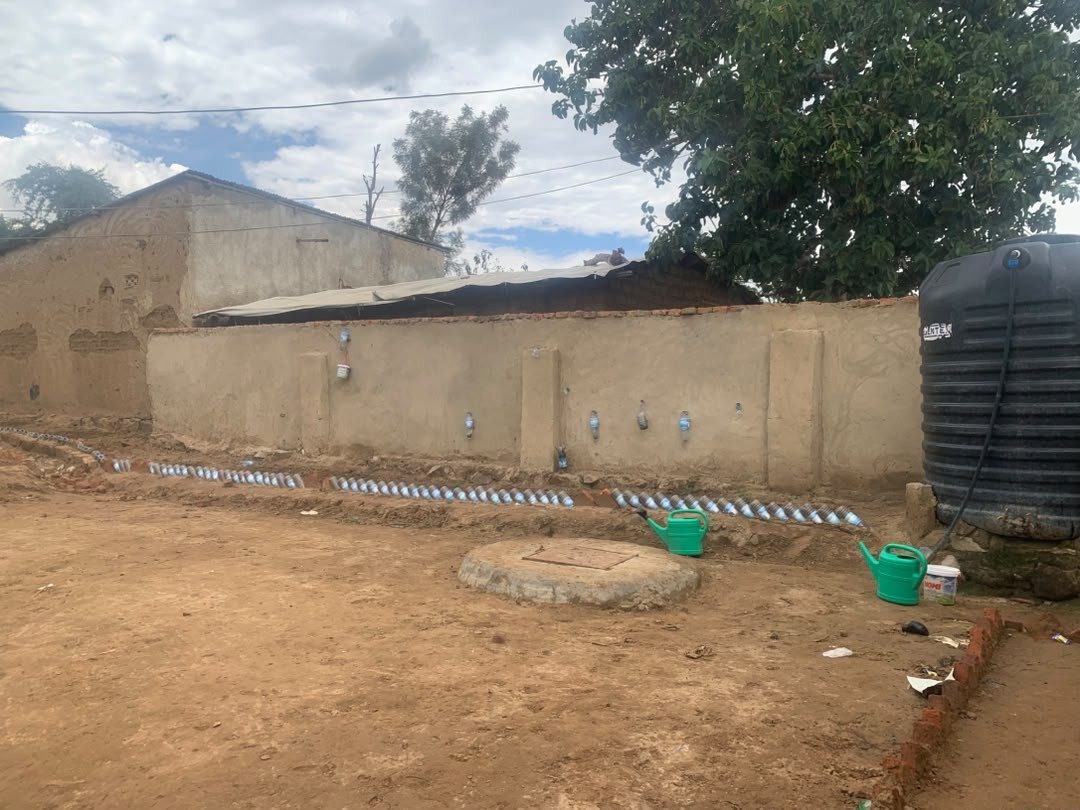
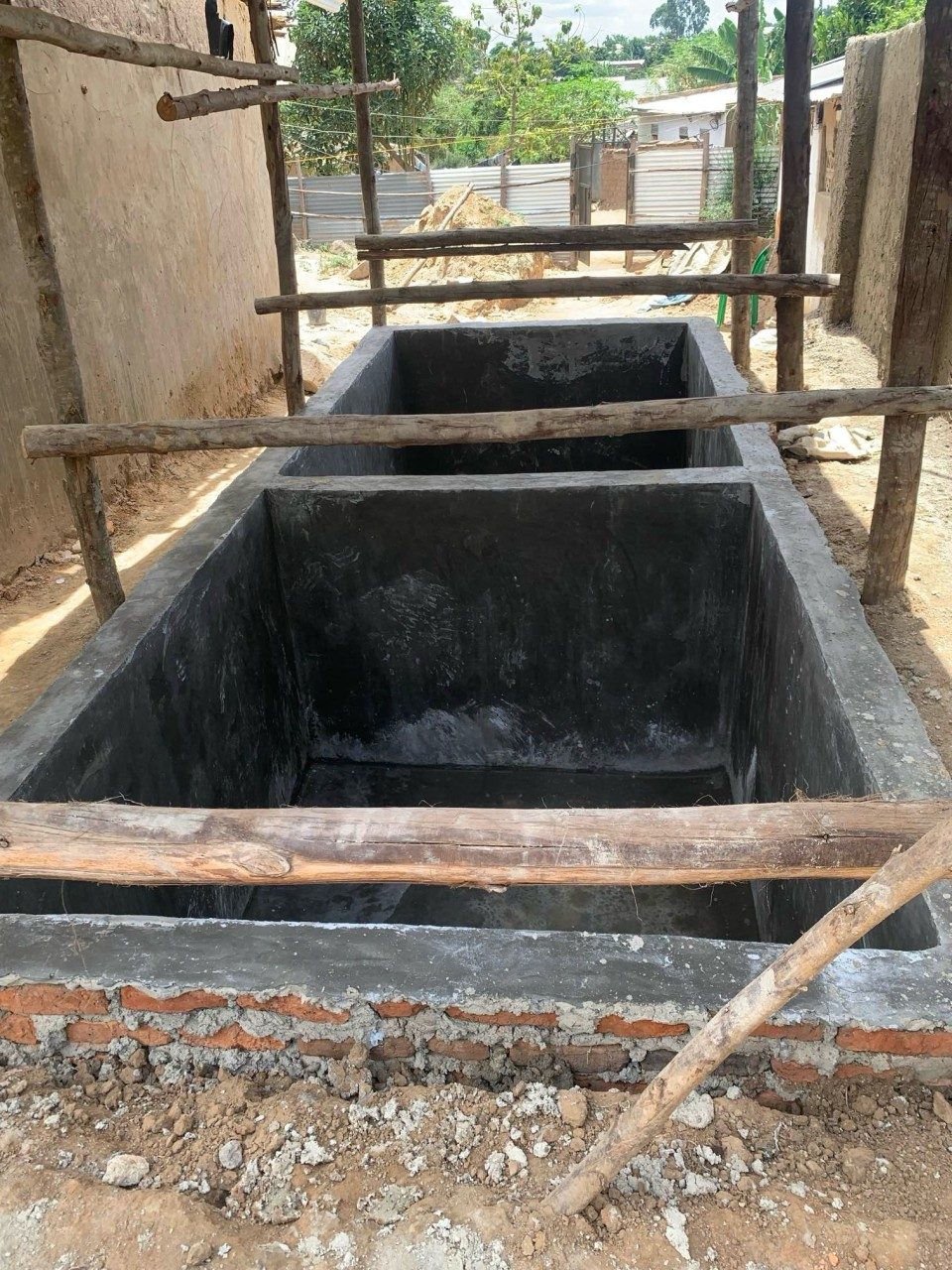
Already done at New Hope
Described by YRUD as its own prior investment. YRUD-documented, not independently audited.
- A 16-metre water well
- A 3,000-litre water storage tank
- A perimeter fence, nearly finished
- Two concrete fish ponds, nearly finished
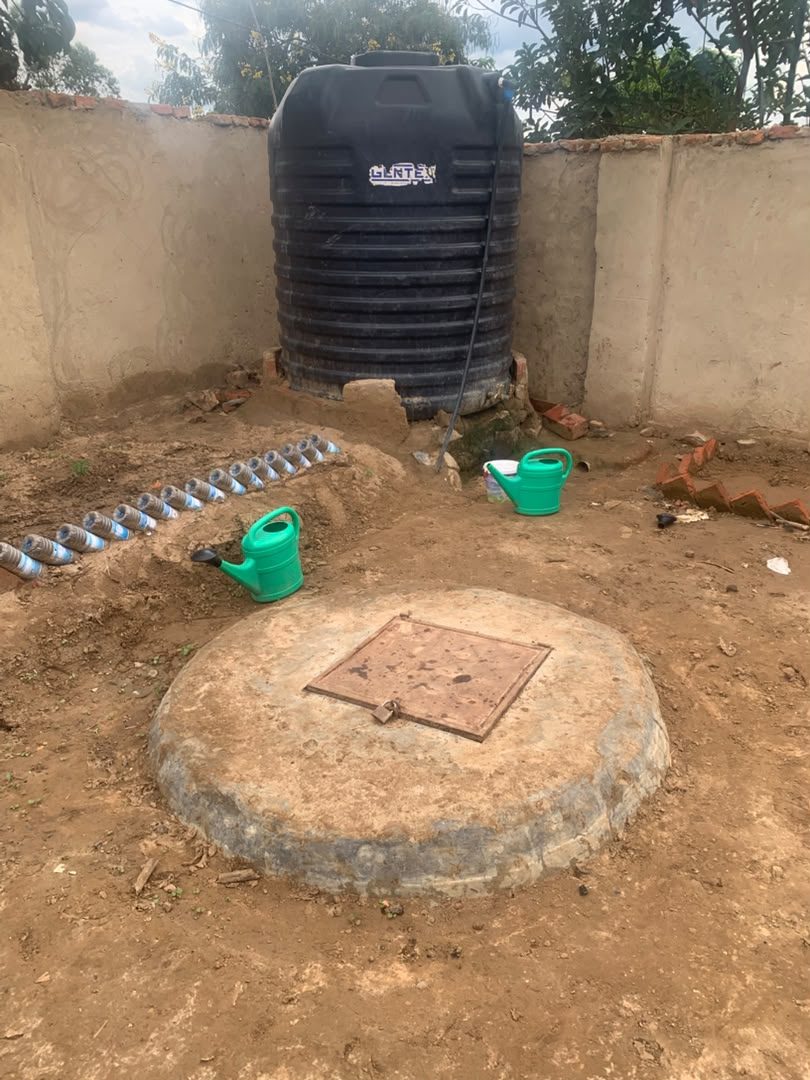
Current setback (November 2026): the electric pump that lifts water from the well has stopped working, and there is no repair shop in the settlement. Read the latest on the project tracker.
The six parts
Water
Use and manage the existing 16-metre well and 3,000-litre tank for pumping and irrigation where feasible. Deepening the well is not included.
Catfish
Finish and equip two fish ponds, stock them with catfish, and train people in feeding, pond care, water quality, fish health and harvesting.
Poultry
A poultry house above the ponds, with a separate collection system so manure never falls into the pond water. Manure is treated before any compost use.
Permaculture garden
A demonstration garden using crop diversity, mulching, soil improvement, careful water use and mature compost.
Waste and compost
Sort household and site waste. Food scraps, leaves and crop residues become compost; plastics, paper and cardboard go to recovery; hazardous waste is kept apart.
Training and small businesses
Train 50–100 refugees and host community members, then help at least 30 people start small businesses linked to the site, with mentoring.
What the pilot aims for
These are targets, not results. The pilot measures progress; it does not claim to end hunger.
- 50–100 people trained in circular economy, water care, composting and business skills.
- At least 30 small businesses started, with mentoring.
- Fish, poultry and garden production started, if the site is technically ready.
- A baseline at the start and an honest end-of-pilot review, including what went wrong.
Indicative budget
A planning estimate. Amounts still need local technical checks and supplier quotes. Moringa work and deepening the well are not included.
| Community mobilisation and participatory planning | USD 700 |
| Completing and equipping two fish ponds | USD 3,000 |
| Poultry house above the ponds, with separate manure collection | USD 3,500 |
| Catfish fingerlings, poultry and start-up inputs | USD 2,500 |
| Permaculture garden, seeds and tools | USD 1,500 |
| Waste sorting and composting area and equipment | USD 1,800 |
| Pumping and irrigation equipment for the existing well | USD 1,000 |
| Technical trainers: fish, poultry, permaculture, composting | USD 2,000 |
| Circular economy and business trainers | USD 1,000 |
| Training materials and logistics | USD 1,200 |
| Start-up support for 30 small businesses (30 × USD 500) | USD 15,000 |
| Mentoring and follow-up | USD 1,800 |
| Monitoring, evaluation and documentation | USD 1,000 |
| Coordination and administration | USD 1,500 |
| Maintenance and contingencies | USD 1,000 |
Total indicative pilot budget: USD 38,500
How it is run
Refugees and host community members help choose participants, shape the activities and review the results — nothing for us without us. Start-up support follows clear, written criteria with a way to raise concerns. Gifts to YRUD are not US tax-deductible.